De Balie TV
door De Balie
De Balie is het podium voor het vrije woord, eigentijdse kunst, politiek en cultuur aan het Leidseplein in Amsterdam. In dertig jaar is De Balie uitgegroeid tot een fenomeen op het gebied van spraakmakende debatten en (kunst)projecten.
Afleveringen(496)
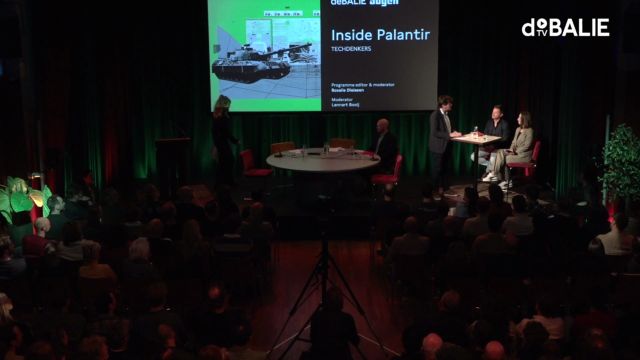
Inside Palantir: Techdenkers with Richard Evans (Palantir Technologies)
Palantir is one of the most powerful and most mysterious companies in the world. The American tech giant, co-founded by MAGA supporter Peter Thiel, provides essential and controversial technology to (Western) militaries and police forces. The Dutch government is also a client. How desirable is that?Palantir, named after the magical seeing stones from Lord of the Rings, develops software that can link, analyze, and visualize enormous amounts of data. The company supplies armies, intelligence agencies, and police services: from the Ukrainian military to help hold back the Russians to the U.S. immigration enforcement agency ICE to track down migrants.The Netherlands has also been using Palantir technology for years, largely outside public view, according to research by Follow the Money. The Dutch military has worked with it since 2010; the National Police uses the software as the core of its data platform for combating serious crime. Large volumes of police data – from incident reports to telecom and location data – are made searchable and analyzable through a single system. Palantir itself states that it only provides a platform and does not process the data.This use raises fundamental questions. How transparent are these systems? Who oversees the algorithms? What safeguards exist against errors, bias, or wrongful suspicion? And what does it mean for our digital sovereignty?About the speakers:Richard Evans is a member of Palantir’s Privacy & Civil Liberties Engineering Team (PCL), working at the intersection of policy, ethics, law and software engineering, and helping to ensure that Palantir’s platforms are built and deployed in ways that uphold rights to privacy and other civil liberties. Based in London, Richard has worked across Palantir’s UK defence, UK healthcare, and international public sector businesses since joining the company in 2017. Richard was previously lawyer in the New Zealand Government, focused on public and constitutional law.Ellen Mok is the founder of Digitale Doetank, a mission-driven advisory firm focused on digital sovereignty and the strategic use of (emerging) technologies. With a background in cyber strategy and national security, she previously worked at KPMG as Manager Cyber Strategy & Risk, where she helped establish the nation-state threats team, and at the Dutch General Intelligence and Security Service (AIVD) as a Cyber Security Advisor and Researcher. Ellen holds two MSc degrees: one in Engineering & Policy Analysis (TU Delft) and another in Crisis & Security Management (Leiden University). She combines technical knowledge with political experience, being a candidate for the European Parliament with D66. Her focus areas include digital sovereignty, tech policy, and national security.Jochem de Groot is director of policy at NLdigital, the trade association of the Dutch digital sector. He wrote the book “Kolonisten van de Cloud” (Colonists of the Cloud), about the geopolitical role of tech companies. He is connected to the Advisory Council of International Affairs and the Netherlands Atlantic Association. Furthermore, he has worked at Microsoft, Philips and the Ministry of Foreign Affairs.Programme editor: Rosalie DielesenSupported by: Adyen
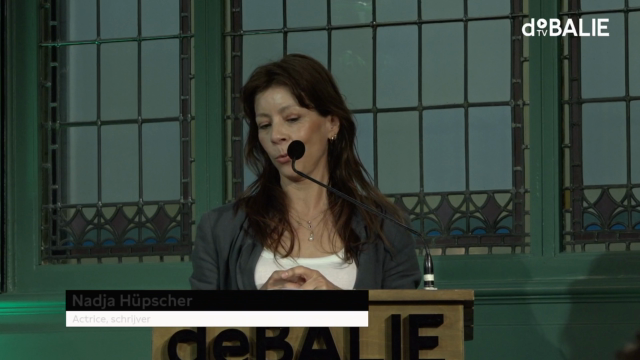
Jongens toch: tussen opvoeding en algoritme
Manosfeer. Giftige mannelijkheid. Crypto-influencers. Het gesprek over jongens gaat dikwijls over wat er gebeurt als de verkeerde afslag al genomen is. Maar hoe voorkom je dat het zo ver komt?Mannelijkheid roept meer vragen op dan ooit en maakt jongens vatbaar voor stemmen die simpele antwoorden bieden. Waarom raken sommige jongens verstrikt in het net van verkeerde rolmodellen en anderen niet? Welke rol spelen opvoeding, school en de sociale omgeving en hoe weet je of je zoon, leerling of vriend ergens tussen de onzichtbare algoritmes, groepschats en online communities aan het afglijden is?Dirk Schrijver, Jens van Tricht, Lauk Woltring en Nadja Hüpscher gaan in gesprek over wat we kunnen doen om te voorkomen dat die jongens de verkeerde afslag nemen.Tijdens het programma vormen vier jonge mannen uit de Jongerenadviesraad Amsterdam (JARA) – Ahmed Ringim Mohammed, Amjad Almatni, Giovanni van Bossé en Rafaël Nooij – een live klankbord in de zaal. Zij reageren tussendoor op het gesprek, stellen vragen aan de sprekers en brengen het perspectief van jonge Amsterdammers het podium op.Programmamaker: Dirk StruikModerator: Liesbeth StaatsIn samenwerking met: JARA
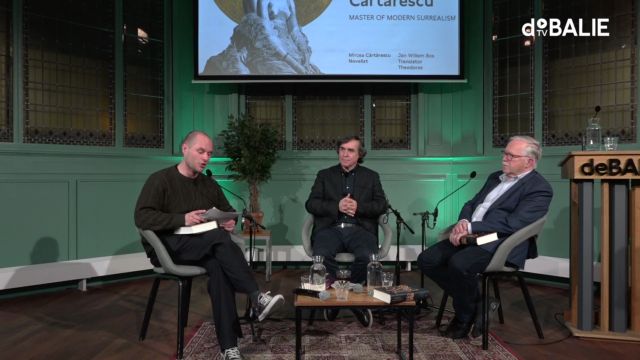
Mircea Cărtărescu: Master of Modern Surrealism
Can obsession turn an impossible dream into reality? In conversation with the master of modern surrealism Mircea Cărtărescu about Theodoros, a novel about the rise of an unlikely emperor.Theodoros is set in the nineteenth century and follows the extraordinary life of the otherwise ordinary Teodor, the son of two servants of a Romanian aristocrat. Raised on stories of Alexander the Great told by his Greek mother, he becomes obsessed with the idea that he too is destined for greatness — and everything else must give way to it. His improbable life path eventually leads him to Ethiopia, where he ascends the throne as Emperor Tewodros II. Theodoros is a surreal epic, written in rich, distinctive prose.About the speakersMircea Cărtărescu (Bucharest, 1956) is considered one of the most important voices in contemporary European literature. His novels and poetry have been widely translated and awarded, and his acclaimed novel Solenoid was hailed by the European press as a masterpiece.Jan Willem Bos (1954) translated more than twenty-five novels, short-story collections, and poetry collections from Romanian. He has also published numerous articles and written several nonfiction books about Romania.Remo Verdickt (1992) is a literary scholar and specialised in Mircea Cărtărescu’s work. He wrote several articles about him, including in De Standaard and Los Angeles Review of Books. He is currently a postdoctoral researcher in literature at KU Leuven. Programme editor: Ianthe MosselmanIn cooperation with: Roemeens Cultureel Instituut Brussel
Nederland, gidsland? – over queer emancipatie en politiek
Ooit stond Nederland bekend als gidsland, maar op het gebied van lhbtiq+-beleid is er de afgelopen jaren weinig wetgeving door de Tweede Kamer aangenomen. Ondertussen stagneert de acceptatie van lhbtiq+’ers. Welke invloed heeft de politiek op het dagelijks leven van queer mensen in Nederland?Van de allereerste Nederlandse homodemonstratie in 1971, de pragmatische aanpak van de aidscrisis in de jaren 80 tot het openstellen van het huwelijk voor gelijke geslachten: de queer emancipatiegeschiedenis wordt graag voorgesteld als een van gestage vooruitgang – en uiteindelijk: voltooiing. Maar hoe eenduidig is dat verhaal? Tijdens dit programma nemen we het idee van Nederland als gidsland onder de loep. Hoe hebben lhbtiq+’ers de afgelopen decennia hun plek in de samenleving opgeëist? Welke rol heeft de politiek daarin gespeeld? En waar staan we nu? De emancipatiegeschiedenis is geen voltooid verleden tijd. Nederland daalt al jaren op ranglijsten wat betreft de rechten van lhbtiq+’ers (op de toonaangevende Europese Rainbow Ranking neemt Nederland plek 13 in). Wat betreft wetgeving is er vooral sprake van stilstand, zo illustreerde de vorig jaar afgeschoten en veelbesproken Transgenderwet nog maar eens. Welke invloed heeft dat op het dagelijks leven van queer mensen?Programmamaker: Rosalie Dielesen
AI at War – with Shane Harris
The Anthropic-case shows how interlinked tech companies and intelligence agencies are. With national security journalist Shane Harris we explore mass surveillance, cyberwarfare and the shifting balance of power in a changing world order. Tech company Anthropic (known for chatbot Claude) made headlines because they refuse to allow their AI models to be used by the Pentagon for mass surveillance of American citizens and autonomous weapons systems. OpenAI, led by Sam Altman, has no problem with that and is supplying the technology to the U.S. government that Anthropic (for now) refused. Meanwhile Anthropic has been sanctioned by Donald Trump.Tech moguls have become essential partners in national security. With American journalist Shane Harris, we ask what role technology companies play in the modern security apparatus. How is cyberwarfare reshaping the global balance of power? And what are the implications for privacy, civil rights and democratic governance in the years ahead?About Shane HarrisShane Harris is a staff writer at The Atlantic. He has written about intelligence, security, and foreign policy for more than two decades. Previously, he was a staff writer for The Washington Post, where he was part of the team that won the 2022 Pulitzer Prize for Public Service for coverage of the January 6 attack on the U.S. Capitol. For his work as a writer, podcaster, and filmmaker, he has received the James Beard Media Award, the Gerald R. Ford Prize, the George Polk Award, and an Emmy nomination. He is the author of two books, The Watchers and @War.
Tachtig jaar na de Revolusi – een gedeeld verhaal?
Op 17 augustus 1945 riepen Soekarno en Hatta de Indonesische onafhankelijkheid uit. Wat in Indonesië de Revolusi is, wordt in Nederland herinnerd als de Bersiap. Is deze gedeelde geschiedenis samen te smeden tot een gezamenlijk verhaal? Met o.a. Bonnie Triyana en Bo Tarenskeen.Na de capitulatie van Japan in 1945, riepen Soekarno en Hatta de onafhankelijkheid uit. Waarop Nederland reageerde met eufemistisch betitelde ‘politionele acties’, een bloedige oorlog om het vooroorlogse koloniale rijk terug te veroveren. De chaotische naoorlogse jaren kregen in Nederland de naam Bersiap (naar de gebruikte strijdkreet, ‘Wees paraat!’), een periode van grootschalig geweld richting bevolkingsgroepen die aan het Nederlandse koloniale systeem gelieerd waren. Indonesië herinnert zich na eeuwen van onderdrukking en kolonisatie de Revolusi en de geboorte van een verenigd Indonesië.Tachtig jaar later lopen de herinneringen nog steeds uiteen en zijn omgeven door gevoeligheden. Nederland kijkt terug; Indonesië kijkt liever vooruit. Slachtoffer- en daderschap grijpen ongemakkelijk op elkaar in en maken eenduidig herdenken problematisch. Is het mogelijk (en wenselijk) die uiteenlopende herinneringen bij elkaar te brengen en tot één gedeeld verhaal te smeden? Tachtig jaar na de onafhankelijkheidsoorlog van Indonesië houden we onze verschillen in herinneren tegen het licht: wat herdenken we, en waarom? Bo Tarenskeen speelt tijdens het programma een fragment uit zijn nieuwste voorstelling SOEKARNO.Programmamakers: Anne Grietje Franssen en Dewi van Leeuwen SastromedjoModerator: Lennart BooijIn samenwerking met: VFondsOver de sprekers:Bonnie Triyana is op 27 juni 1979 geboren in Rangkasbitung, Lebak – de plek waar Eduard Douwes Dekker ooit als assistent-resident werkzaam was en geïnspireerd werd om Max Havelaar te schrijven onder zijn welbekende pseudoniem, Multatuli. Bonnie is historicus, publiek intellectueel en oprichter van Historia.ID, het eerste populaire geschiedenismagazine van Indonesië. In 2018 nam hij het initiatief voor de oprichting van het Multatuli Museum, dat de nadruk legt op antikoloniale verhalen in Rangkasbitung, Lebak. Zijn betrokkenheid bij de Revolusi! Tentoonstelling in het Rijksmuseum leidde tot controverse toen hij een artikel schreef over de term ‘bersiap’ in het NRC. Van 2021 tot 2024 speelde hij een actieve rol als secretaris van het Repatriëringsteam voor Indonesische artefacten in diverse musea in Nederland. Sinds 1 oktober 2024 is hij lid van de Tweede Kamer van de Republiek Indonesië, met een focus op onderwijs en cultuur.Anne-Lot Hoek is historica, auteur en onafhankelijk onderzoeker. Ze onderzoekt en schrijft over (post)koloniale geschiedenis en dekolonisatie, en publiceerde uitvoerig over de Indonesische onafhankelijkheidsstrijd (1945-1949) voor o.a. NRC en De Groene Amsterdammer. In 2021 verscheen het veelgeprezen De strijd om Bali. Imperialisme, verzet en onafhankelijkheid 1846-1950 (Bezige Bij), waarop ze ook promoveerde aan de Universiteit van Amsterdam. Momenteel werkt ze aan een project over Zuid-Afrika en Namibië als research fellow aan het IISG. Bo Tarenskeen is toneelschrijver, regisseur, acteur en mede-oprichter van Theater Na de Dam. Zijn voorstelling Het Indisch interieur (2022) was in Nederland het eerste intergenerationele toneelstuk over ons koloniale verleden, en won het Theater Talent Stipendium van het Cultuurfonds. Momenteel werkt hij aan een productie over Soekarno, die in september in première gaat.Feba Sukmana is journalist, schrijver en moderator. Ze is geboren en opgegroeid in Jakarta, Indonesië. Ze heeft haar masteropleiding Dutch Studies aan de Universiteit Leiden afgerond, met een specialisatie in Indische letteren en postkoloniale literatuur. Feba’s werk bevindt zich op het snijvlak van taal, journalistiek, gender en literatuur. Onlangs heeft ze samen met Lara Nuberg De mooiste brieven van Kartini gepubliceerd.Benjamin Caton is de initiatiefnemer en coordinator van de jaarlijkse Dekoloniale Indonesië Nederland herdenking in Amsterdam op 16 augustus. Een brede herdenking, waar leren, verbinden en helen centraal staan, en verschillende groepen niet tegenover elkaar maar naast elkaar komen te staan. Daarnaast is hij coördinator Rechtvaardigheid, Diversiteit, Inclusie en Gelijkwaardigheid bij Greenpeace. Verbinden, strijden tegen onrecht en de wereld sociaal verduurzamen; dat staat in Benjamins werk centraal.
Theatre of Democracy: Łukasz Twarkowski
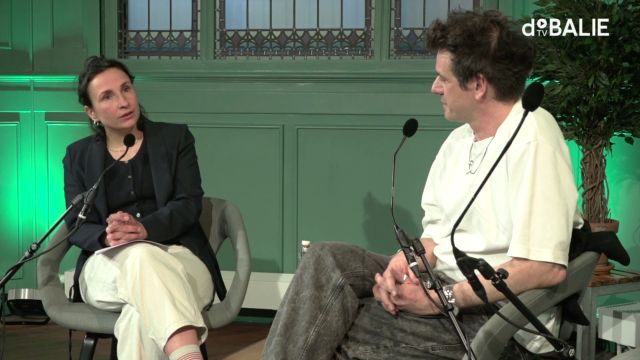
‘Theatre is an experience. A performance is never just an image.’ Łukasz Twarkowski is one of the most compelling theatre makers today, always trying to push the boundaries of the art form. In conversation with Łukasz Twarkowski.At the latest Holland Festival, Łukasz Twarkowski made a strong impression with his overwhelming multidisciplinary production Rohtko, exploring the concept of originality and forgery in the art world, inspired by a fake Mark Rothko sales scandal. In an earlier edition of the festival in 2023, Twarkowski organised with Respublika a six-hour utopian rave Het Parool called ‘an experience like no other’. Twarkowski’s work can rightfully be called groundbreaking.The originally Polish theatre maker creates interdisciplinary performances at the intersection of theatre, video art, and performance art. His work explores major philosophical questions of our time, including human consciousness, the rise of AI, and the place of the human being in the late capitalist world. With his work, Twarkowski tries to find new ways of storytelling that do justice to how the contemporary individual thinks and experiences the world. Because in a world flooded with images, traditional theatre is no longer up to that task, according to Twarkowski.This event is the first episode in a new series at De Balie, featuring conversations with leading European theatre makers about their work and vision. At the heart of the series lies theatre as a democratic space: a place where audiences are invited to reflect on what remains unspoken in society, and where art confronts the most urgent questions of our time.Łukasz Twarkowski is a creator of multimedia performances combining theatre and visual arts. He places his projects in the context of extending reality through multimedia. A crucial element of Twarkowski’s creative work is investigating the ability and limitations of theatre as a medium and tool of communication. By permanent deconstruction of narratives, questioning the fixed habits of the audience and by meaningful usage of new media, Twarkowski creates a new, original language of stage performance based on multimedia and, more widely, digital technologies. In using these, Twarkowski analyses and observes increasingly complex relations between the Real, the Symbolic and the Imagined.Interview by: Ianthe MosselmanSupported by: Vfonds
Gesprek Voor de Dam: hoe hou je herdenken levend?
Met Adriaan van Dis, David Wertheim, Frida Boeke en Willem WagenaarTachtig jaar na de bevrijding bewaakt de koninklijke marechaussee de ingangen van Joodse scholen. De laatste ooggetuigen verdwijnen. En de Holocaust wordt steeds vaker ingezet als argument in een politieke strijd die niets met de Holocaust te maken heeft. Hoe houd je herdenken levend, zonder het te verliezen aan de polarisatie?Aan de vooravond van de Nationale Dodenherdenking gaan Adriaan van Dis, David Wertheim, Frida Boeke en Willem Wagenaar met elkaar in gesprek over wat het betekent te gedenken in een verdeelde samenleving, en welke eisen dat stelt aan onderwijs, literatuur en burgerschap.Adriaan van Dis hield onlangs de eerste Loe de Jong-lezing. Hij pleit voor wat hij ‘verplaatsingskunde’ noemt: het vermogen je te verplaatsen in het verhaal van de ander, ook als dat verhaal botst met het jouwe.Over Gesprek Voor de DamElk jaar organiseert De Balie in samenwerking met Theater Na de Dam Gesprek Voor de Dam. In aanloop naar de Nationale Dodenherdenking op 4 mei gaan we met gasten en publiek in gesprek over wat de herdenking in deze tijd betekent en waar het nog te weinig over gaat.In samenwerking met: Theater na de DamModerator: Lennart Booij
The future of Ukrainian refugees in the Netherlands
Since the grand-scale invasion of Ukraine, the Netherlands has received more than 130.000 of Ukrainian refugees. Their legal status allows them to work and go to school, but the majority lives in crisis shelter. But with this temporary status changing in 2027, housing under stress and an uncertain outcome of the war, it is increasingly difficult to make plans for the future. On the eve of the 4th anniversary of Russia’s full scale invasion, we discuss the Ukrainian experience in the Netherlands. How do you balance the hope for a future in Ukraine with the realities of building a life in the Netherlands? How do you take charge of your life when you are dependent on the policies of the Dutch government, and the proposed long term policies of the Dutch government are far from clear? A discussion on the needs of Ukrainians, the capacities of Dutch municipalities and long term thinking in an uncertain world.Programme editor: Veronica BaasModerator: Lennart Booij
Is publieksfilosofie echt filosofie?
Welke rol heeft filosofie in het dagelijks leven? En in het publieke debat? Of is het zinloos om de zeer gespecialiseerde filosofie bedreven aan de universiteit te willen linken aan een maatschappelijk belang? Met o.a. Stine Jensen en Paul Cobben.Wat is publieksfilosofie? De filosofen die komen opdraven in talkshows verkondigen vaak een slimme, geëngageerde mening, maar zijn niet ‘live’ op zoek naar een juiste houding tegenover hun onwetendheid. Terwijl dat juist is waar filosofie om draait, vindt Coen Simon, hoofdredacteur van Filosofie Magazine. En in principe moet iedereen dat kunnen, vindt ook Eva-Anne Le Coultre, pleitbezorger voor filosofie op het vmbo. Inzichten van grote filosofen kunnen daarbij helpen, en daarvoor hoef je echt hun werk niet van A tot Z te snappen. Daar is emeritus hoogleraar filosofie Paul Cobben – Hegelspecialist – het niet mee eens. Tegeltjeswijsheden hebben weinig te maken met zorgvuldig uitgedachte filosofieën. Vanavond gaan we in gesprek over de aard van filosofie, de rol van filosofie in de samenleving en in het onderwijs en de vraag of filosofie aan iedereen besteed zou moeten zijn. Stine Jensen en Jonasz Dekkers verzorgen een intermezzo over de filosofie van het publieke debat.Programmamaker: Veronica BaasIn samenwerking met: Filosofie Magazine en Maand van de Filosofie
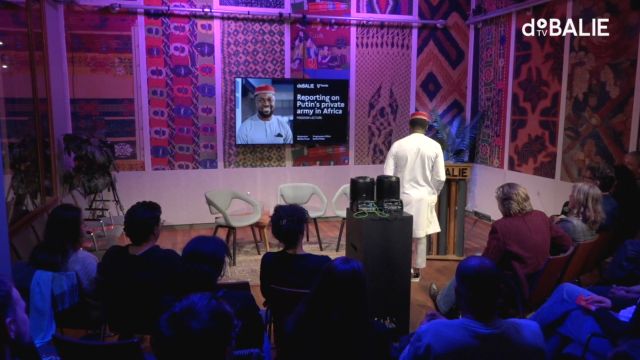
Reporting on Putin’s Private Army in Africa with journalists Philip Obaji and Olaf Koens
Philip Obaji Jr. has documented over a hundred atrocities committed by Russian mercenaries in Central Africa. In his Freedom Lecture, he will reflect on the dangers of exposing the truth in one of the most underreported regions of the world and discuss the broader Russian grip on Africa.Russia has a strong presence in Central Africa. In the past through the Wagner mercenary group, and now through the Africa Corps. Russian soldiers fight rebels and secure natural resources. This is accompanied by atrocities at large scale against the local population. Women are victims of systematic sexual violence.We know this in part thanks to the work of Nigerian journalist Philip Obaji Jr. For almost ten years, he has been investigating Russian activities in Africa, documenting over a hundred instances of abuse against local populations. At great personal risk: in 2024, Obaji was arrested and tortured by Russian mercenaries.The humanitarian crimes committed can not be understood without the broader geopolitical context, Obaji stated: ‘I began by investigating human rights abuses, but now I’m seeing a relationship between this and issues around disinformation and political instability.’In his Freedom Lecture, Obaji will reflect on the realities of reporting on armed conflict in Africa. Following the lecture, we’ll map the the murky networks of paramilitary groups and Russian influence in sub-Sahara Africa, and discuss the essential role of journalism in documenting the human rights abuses commited there, together with journalist and author Olaf Koens.Programme editor: Senna FeliusModerator: Mirthe FreseSupported by: Vfonds
Kennismakers: Een blik op femicide. In deze editie onderzoekt men wat femicide is,en waar de mogelijke blinde vlekken van dit containerbegrip zitten en wordt er vooral gekeken in wat er aan gedaan kan worden.
Femicide is de laatste jaren een ingeburgerde term in het publieke debat geworden. Maar hoe geschikt is dit begrip om huiselijk geweld te begrijpen?De politiek lijkt de noodzaak van concreet beleid om de veiligheid van vrouwen te vergroten in te zien. Zo maakte het vorige kabinet 10 miljoen euro vrij voor de bestrijding van femicide, wil de huidige coalitie het wettelijk mogelijk maken dat bedreigde vrouwen het politiedossier van hun partner in kunnen zien en heeft de gemeente Rotterdam een speciaal actieplan opgesteld.Maar wat kan de samenleving concreet doen tegen femicide? En hoe geschikt is deze term als lens om naar gendergeweld te kijken? Ontsnapt daardoor minder dodelijk, maar veel vaker voorkomend, huiselijk geweld niet aan onze blik? Deze editie van Kennismakers onderzoeken we wat femicide is, onderzoeken we wat de mogelijke blinde vlekken van dit containerbegrip zijn en kijken we naar wat we kunnen doen. Welk beleid wordt momenteel opgesteld om gendergerelateerd geweld aan te pakken, en wat is werkelijk effectief?Programmamaker: Sylvia VegterModerator: Monique HindriksIn samenwerking met: SIA